

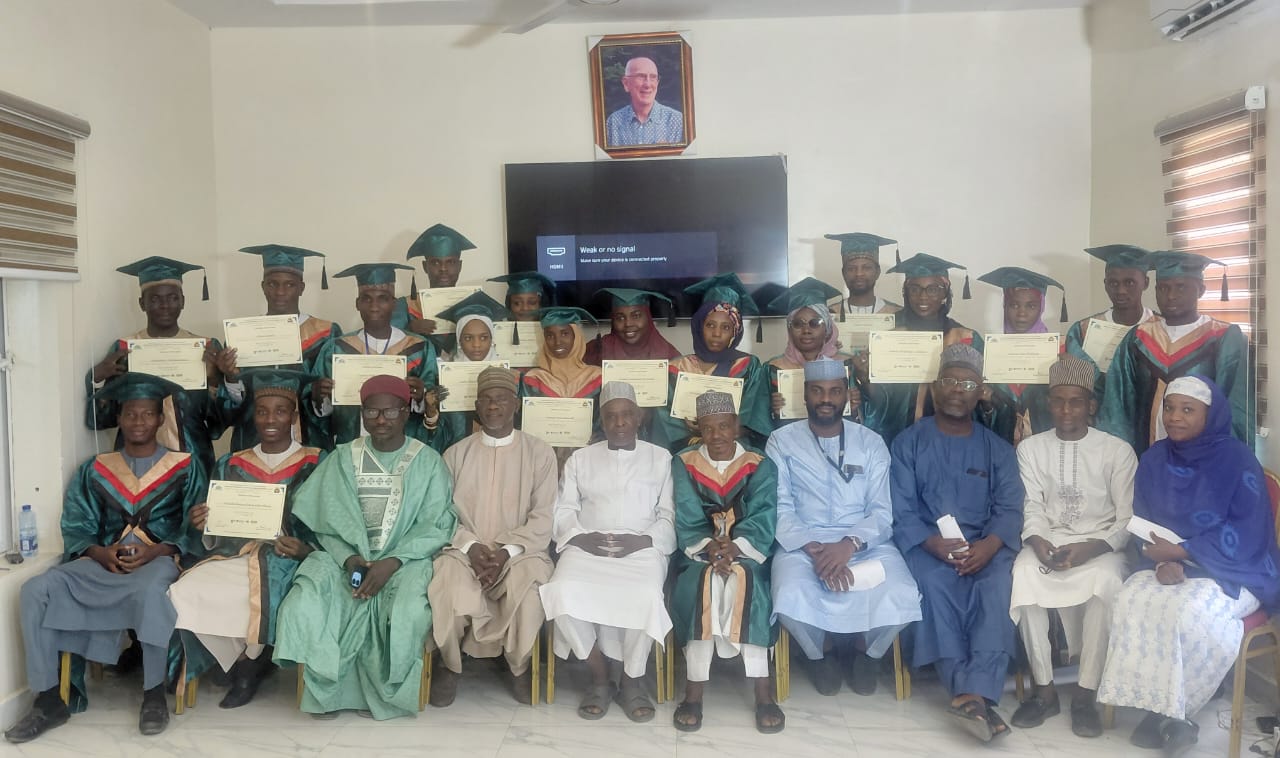
School of community networks concludes 5th edition,
Trains 25 experts to drive connectivity in underserved communities
Kola Oyelere Kano
The School of Community Networks has wrapped up its 5th edition, marking five consecutive years of training local experts to deploy community-driven connectivity solutions across underserved areas in Nigeria.
This year, 25 participants successfully completed the intensive programme, designed to build technical capacity for designing, installing and maintaining community network infrastructure.
He emphasized that the initiative is part of a broader effort to ensure that rural and marginalised communities are not left behind in the digital age.
Speaking at the closing ceremony, Executive Director of the Centre for Information Technology and Development (CITAD), Yunusa Zakari Ya’u, said the school was created to address the persistent digital exclusion faced by rural and low-income communities.
He noted that many commercial service providers avoid these areas due to low profit margins, making community networks a viable alternative to expand internet access.
“The School equips participants with the skills needed to design, build and maintain community network infrastructure—an essential, community-owned model that brings connectivity to places commercial operators overlook,” Ya’u said.
He highlighted that several African countries—including Kenya, Uganda, South Africa and Ghana—already have national policies supporting community networks. Nigeria, however, is yet to institutionalize such frameworks.
He disclosed that engagements with the Nigerian Communications Commission (NCC) are ongoing. “Nigeria currently has no national policy on community networks, but the participation and support of the NCC in this edition show a growing commitment to recognizing the importance of community-driven connectivity models,” the facilitator said.
“Graduates of the programme are expected to return to their communities to deploy connectivity solutions and champion enabling policies that encourage locally owned communication infrastructure.”he said
In a related development, the Coordinator of the Urban Community Network Project and the School of Community Network, Adamu Hadejia, has reaffirmed the commitment of the initiative to reducing the digital divide between urban and rural communities.
Speaking to journalists, Hadejia described many remote areas—often called the “last mile”—as places still struggling with weak or nonexistent network coverage.
He explained that the School was established to empower young people from such communities with practical skills in community engagement, advocacy, resource mobilisation and infrastructure deployment.
“Until communities understand that they deserve local solutions to bridge the connectivity gap, nothing can happen,” he said.
“It requires collective contributions from the people, service providers, regulators like NCC and NITDA, and government institutions.”
Hadejia noted that the programme especially targets two vulnerable categories: communities with extremely poor-quality networks
He added that digital hubs established through the programme have significantly improved digital literacy among youth previously held back by technophobia.