
Close Menu
  • Home
  • Featured
  • News
  • Politics
  • Entertainment
  • Security
  • Sports
  • More
    • Agriculture
    • Climate Change
    • Crime
    • Education
    • Environment
    • Health
    • International
    • Law and Order
    • Opinion
    • Videos
Facebook X (Twitter) Instagram
CONCORD MEDIA
SUBSCRIBE
  • Home
  • Featured
  • News
  • Politics
  • Entertainment
  • Security
  • Sports

    Stakeholders call for overhaul of Kano Pillars FC management amid poor NPFL performance

    November 4, 2025

    First Nigerian emerge Speaker of AYDP, dedicated victory to Nigeria’ s leadership – Akerele

    August 21, 2025

    Kano Pillar Club:NUJ  hails  Malikawa’s  fresh role, described it as most suitable 

    July 5, 2025

    Kano Governor renames sports  institute to honour 22 late athletes

    June 29, 2025
  • More
    • Agriculture
    • Climate Change
    • Crime
    • Education
    • Environment
    • Health
    • International
    • Law and Order
    • Opinion
    • Videos
CONCORD MEDIA
Home » Dangote refinery accuses NMDPRA of granting licences to import banned, dirty refined products
Economy

Dangote refinery accuses NMDPRA of granting licences to import banned, dirty refined products

EditorBy EditorJune 24, 202406 Mins Read
DANGOTE


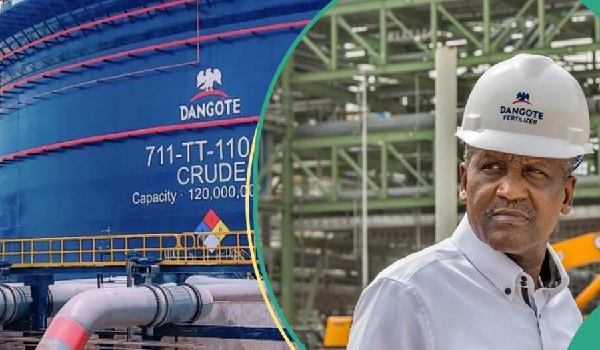
THE vice president, Oil and Gas at Dangote Industries Limited, DIL, Devakumar Edwin, has accused the Nigerian Midstream and Downstream Petroleum Regulatory Authority, NMDPRA of granting licences, indiscriminately to marketers to import dirty refined products into the country.

He made this know while speaking
to a group of Energy Editors at a one-day training programme, organised by the Dangote Group, Edwin also accused International Oil Companies, IOCs, in Nigeria of doing everything to frustrate the survival of Dangote Oil Refinery and Petrochemicals.

He stated that  “the Federal Government issued 25 licences to build refinery and we are the only one that delivered on promise. In effect, we deserve every support from the Government.

It is good to note that from the start of production, more than 3.5 billion litres, which represents 90 per cent of our production, have been exported.
 We are calling on the Federal Government and regulators to give us the necessary support in order to create jobs and prosperity for the nation.”

According to him, the IOCs are deliberately and wilfully frustrating the refinery’s efforts to buy local crude by jerking up high premium price above the market price, thereby forcing it to import crude from countries as far as United States, with its attendant high costs.

“While the Nigerian Upstream Petroleum Regulatory Commission (NUPRC) are trying their best to allocate the crude for us, the IOCs are deliberately and willfully frustrating our efforts to buy the local crude.

It will be recalled that the NUPRC, recently met with crude oil producers as well as refineries owners in Nigeria, in a bid to ensure full adherence to Domestic Crude Oil Supply Obligations (DCSO), as enunciated under section 109(2) of the Petroleum Industry Act (PIA).

He however disclosed that the IOCs’ objective is to ensure that our Petroleum Refinery fails. It is either they are deliberately asking for ridiculous/humongous premium or, they simply state that crude is not available.

At some point, we paid $6 over and above the market price. This has forced us to reduce our output as well as import crude from countries as far as the US, increasing our cost of production.

He hinted that “It appears that the objective of the IOCs is to ensure that Nigeria remains a country which exports Crude Oil and imports refined Petroleum Products.

They (IOCs) are keen on exporting the raw materials to their home countries, creating employment and wealth for their countries, adding to their GDP, and dumping the expensive refined products into Nigeria – thus making us to be dependent on imported products.

Edwin said ” It is the same strategy the multinationals have been adopting in every commodity, making Nigeria and Sub-Saharan Africa to be facing unemployment and poverty, while they create wealth for themselves at our expense.

This is exploitation – pure and simple. Unfortunately, the country is also playing into their hands by continuing to issue import licences, at the expense of our economy and at the cost of the health of the Nigerians who are exposed to carcinogenic products.

“In spite of the fact that we are producing and bringing out diesel into the market, complying with ECOWAS regulations and standards, licences are being issued, in large quantities, to traders who are buying the extremely high sulphur diesel from Russia and dumping it in the Nigerian Market. Since the US, EU and UK imposed a Price Cap Scheme from 5th February, 2023 on Russian Petroleum Products, a large number of vessels are waiting near Togo with Russian ultra-high sulphur diesel and, they are being purchased and dumped into the Nigerian Market.

“In fact, some of the European countries were so alarmed about the carcinogenic effect of the extra high sulphur diesel being dumped into the Nigerian Market that countries like Belgium and the Netherlands imposed a ban on such fuel being exported from its country, into West Africa, recently.

 It is sad that the country is giving import licences for such dirty diesel to be imported into Nigeria, when we have more than adequate petroleum refining capacity locally…”

It would be recalled that in May, Belgium and Netherland adopted new quality standards to halt the export of cheap, low-quality fuels to West Africa, harmonising its standards with those of the European Union.

 These measures synchronise fuel export standards with the European domestic market, specifically targeting diesel and petrol with high sulphur and chemical content. Historically, these fuels, with sulphur content reaching up to 10,000 ppm, were exported at reduced rates to countries like Nigeria and other West African consumers.

Belgium’s Minister of Environment, Zakia Khattabi, announced that his country followed the Netherland, which in April 2023 also prohibited the export of low-quality petrol and diesel to West Africa via the ports of Amsterdam and Rotterdam. Khattabi emphasised that the Netherlands’ decision to restrict dirty fuel exports had redirected the trade to Belgium, now used by oil producers and traders to export gasoline with excessively high levels of benzene and sulphur.

“For far too long, toxic fuels have been departing from Belgium to destinations including Africa. They cause extremely poor air quality in countries such as Ghana, Nigeria, and Cameroon and are even carcinogenic,” said Khattabi.

In September 2017, an investigation by an international organisation, Public Eye revealed that polluted and toxic fuels were being exported on a large scale from the ports of Rotterdam and Amsterdam for export to African markets.

As much as a quarter of the petrol and diesel available in West Africa originates from the ports of Amsterdam, Rotterdam, and Antwerp.
These fuels contain sulphur and other pollutants, such as cancer-causing benzene, in quantities up to 400 times the limits permitted in Europe.
 The Netherlands and Belgium were enjoined to enforce regulations to shield millions of Africans from exposure to toxic fuels.

The decision of the Nigerian Midstream and Downstream Petroleum Regulatory Authority (NMDPRA), in granting licenses indiscriminately for the importation of dirty diesel and aviation fuel has made the Dangote refinery to expand into foreign markets.

 The refinery has recently exported diesel and aviation fuel to Europe and other parts of the world. The same industry players fought us for crashing the price of diesel and aviation fuel, but our aim, as I have said earlier, is to grow our economy.

He noted that because the refinery meets the international standard as well as comply with stringent guidelines and regulations to protect the local environment, it has been able to export its products to Europe and other parts of the world.

While appealing to the Federal Government and the National Assembly to urgently intervene for speedy implementation of the PIA and to ensure the interest of Nigeria and Nigerians are protected, he said: “Recently, the government of Ghana, through legislation has banned the importation of highly contaminated diesel and PMS into their county.

 It is regrettable that, in Nigeria, import licences are granted despite knowing that we have the capacity to produce nearly double the amount of products needed in Nigeria and even export the surplus.
Since January 2021, ECOWAS regulations have prohibited the import of highly contaminated diesel into the region.”

Share. Facebook Twitter Telegram WhatsApp
Previous ArticleEmirship tussle: Group advise parentsnot to allow politicians,  use their children to foment trouble in Kano
Next Article Next Post

Related Posts

Pensioners in Niger appeal to Gov. Bago to resume payment of entitlements

January 14, 2026

Kano graduates 2,260 youths, disburses empowerment packages

January 12, 2026

Niger State moves to unlock solid minerals as Commissioner engages Elin mining group on strategic investment

January 10, 2026

Takuma hosts FUT Minna delegation, seeks strategic investment partnership

January 8, 2026

CITAD raises alarm over alleged alteration of tax reform acts, calls for suspension

December 19, 2025

CITAD flags gender, environmental gaps in Nigeria’s 2023 digital economy plan

December 18, 2025
Add A Comment
Leave A Reply Cancel Reply

Stay In Touch
  • Facebook
  • Twitter
  • Pinterest
  • Instagram
  • YouTube
  • Vimeo
Don't Miss

Kano executive council approves ₦8.53bn for infrastructure, health, social projects

By EditorJanuary 19, 2026

Kano executive council approves ₦8.53bn for infrastructure, health,social projects By Kola Oyelere, Kano The Kano…

Dorayi massacre: Police arrest two suspects, including victim’s nephew

January 18, 2026

Kano govt dismisses claims of administrative shutdown over file directive

January 17, 2026

Governor Yusuf appears with red cap, NNPP flag at council meeting amid defection rumours

January 16, 2026
© 2026 CONCORD MEDIA
  • Home
  • Privacy Policy
  • Hisbah security operative arrest Jigawa Commissioner with a married woman in uncompleted building in Kano Kano

Type above and press Enter to search. Press Esc to cancel.