


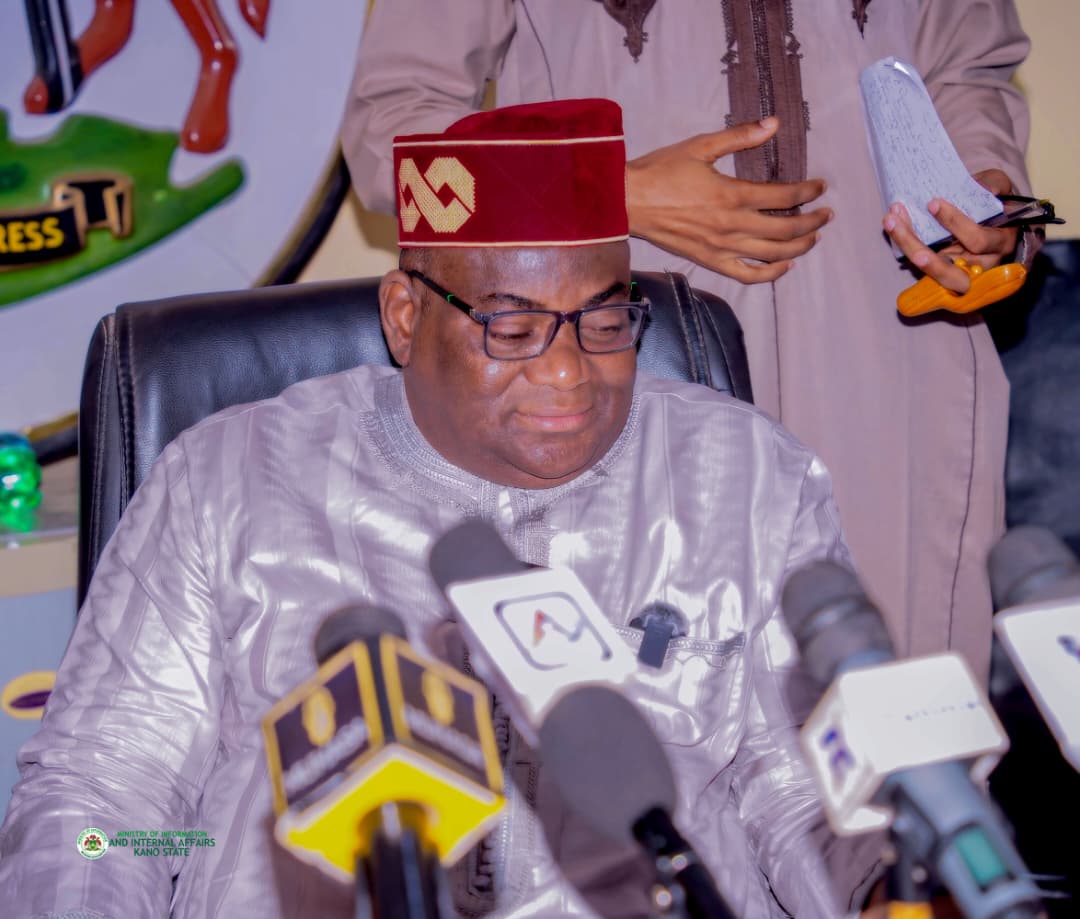
DR IBRAHIM ABDULLAHI WAIYA: FROM DALA ROOTS TO THE FRONTLINE OF KANO’S PUBLIC COMMUNICATION.
By : Ahmad Muhammad Sani Gwarzo, Anipr.
In the historic heart of the ancient city of Kano, where generations have contributed to the growth of one of northern Nigeria’s most important centres of commerce, culture, scholarship and public life, the story of Comrade Dr Ibrahim Abdullahi Waiya, PhD, carries a distinctive message about public service, communication and community responsibility.
Dr Waiya, the Honourable Commissioner for Information and Internal Affairs, Kano State, has become a prominent voice in the communication of government policies, programmes and public initiatives under the administration of Governor Abba Kabir Yusuf FNISE.
His present responsibility places him at an important point between government and society.
Through the Ministry of Information and Internal Affairs, he is expected to help citizens understand government policies while also contributing to constructive communication between public institutions, the media and communities.
With his background in professional journalism, law, civil society engagement and peace advocacy, Dr Waiya brings together several areas of experience that are relevant to contemporary public administration.
Journalism has been an important part of his professional identity.
His understanding of the media gives him an appreciation of the need for responsible reporting, accurate information, professional ethics and effective communication between government and citizens.
His legal background also provides an additional perspective on public affairs, particularly regarding the importance of law, institutions, civic responsibility and the relationship between government and the governed.
Dr Waiya is a son of Dala Local Government Area of Kano State, a historic part of the ancient city of Kano.
His connection with Dala remains an important element of his public identity and reflects his roots in the social and cultural heritage of Kano.
From those local roots, he has taken on responsibilities extending across the entire state, requiring regular engagement with people from different communities, professional groups and social backgrounds.
His supporters and associates regard him as a worthy ambassador of his family and community, particularly because his public responsibilities have placed him in a position to contribute to the wider affairs of Kano State.
His journey into public service has also been shaped by civil society and peacebuilding activities.
Before joining the Kano State Executive Council, he participated in initiatives concerned with peace, development, dialogue and civic engagement.
That experience has become relevant to his present assignment because information and internal affairs are closely connected with peaceful coexistence, responsible citizenship and constructive engagement.
One of the important challenges confronting public communication today is the rapid spread of information through digital platforms.
News can reach millions of people within minutes, but inaccurate information can travel with the same speed.
This makes the responsibility of professional communicators particularly important. Government information must be communicated clearly, while journalists and citizens also require access to credible information with which they can make informed judgments.
Dr Waiya’s ministry therefore operates within an environment where traditional journalism, television, radio, online media and social media increasingly overlap.
His engagement with information structures across Kano’s 44 Local Government Areas is particularly important in this regard.
Grassroots information officers can help bridge the gap between government programmes and communities by communicating in ways that people understand.
The role of such officers is not simply to publicise government activities.
It also includes understanding local information needs and helping to ensure that important public messages reach communities beyond the major urban centres.
Dr Waiya has publicly emphasised professionalism and responsible information dissemination, reflecting the importance of accuracy in government communication.
For Kano State, effective information management is particularly significant because the state has a large and diverse population spread across urban, semi-urban and rural communities.
A strong communication system can help citizens understand public programmes, government decisions and opportunities available to them.
The Commissioner has also been associated with issues relating to youth development, peace and security awareness, areas that require continuous dialogue among government agencies, traditional institutions, community leaders, civil society organisations and young people.
His professional development has continued alongside his public responsibilities.
His successful PhD Viva in International Relations at Skyline University Nigeria in September 2026 represents another academic milestone in his career.
The achievement further strengthens the academic dimension of a professional journey that has included journalism, public communication, civil society and governance.
His supporters view his academic and professional development as evidence of a continuing commitment to learning and public service.
At the state level, his office has a particularly important responsibility in explaining the policies and programmes of Governor Abba Kabir Yusuf’s administration to the people.
Whether the subject is education, healthcare, infrastructure, agriculture, economic empowerment, youth development, security or social welfare, citizens need accessible and reliable information about public programmes.
The Commissioner therefore occupies a strategic position in ensuring that information concerning government activities is communicated in a manner that is understandable and responsible.
At the same time, professional communication requires room for questions, scrutiny and constructive criticism. A healthy relationship between government and the media depends on credible information, professional journalism and respect for the public’s right to understand matters of public interest.
This is where Dr Waiya’s experience in journalism and civil society can be particularly relevant to his current responsibilities.
His public profile is consequently not limited to his political appointment. It also reflects the journey of a communicator who has moved through professional and civic spaces before taking on responsibility within the Kano State Government.
His roots in Dala remain a reminder that public service ultimately connects back to communities and ordinary citizens.
From the ancient city of Kano to the wider 44 Local Government Areas, the responsibility of public communication requires commitment, accessibility and a clear understanding of the people being served.
Dr Waiya’s supporters describe him as a person who strongly identifies with Kano State and supports the development aspirations of its people and the administration of Governor Abba Kabir Yusuf.
His assignment, however, also carries an institutional responsibility to communicate government affairs professionally and to maintain constructive engagement with journalists, civil society organisations and citizens irrespective of their backgrounds.
The broader significance of his work lies in the belief that development requires more than physical projects.
It also requires information, public understanding, participation and trust between institutions and citizens.
A road may connect communities physically, but effective communication can connect government programmes with the people they are designed to serve.
In an era of digital communication, the work of information professionals has therefore become increasingly important to governance.
Dr Ibrahim Abdullahi Waiya’s professional journey—from his Dala roots and journalism background through civil society and peacebuilding to his present role as Commissioner—offers an example of how communication professionals can become part of the wider machinery of public administration.
His continuing challenge is to strengthen credible communication, encourage professionalism and help ensure that government information reaches Kano’s diverse communities.
His story is ultimately a story of roots, professional development, public communication and service—from Dala in the ancient city of Kano to a state-wide responsibility touching the lives of citizens across Kano State.
As he continues in his assignment, the quality of communication between government and citizens will remain an important part of the broader governance process.
And for Kano, a state whose history has long been associated with scholarship, enterprise, culture and public discourse, effective and responsible communication remains an essential component of building a better-informed society.